Service Designers: How to Get Started in Advancing Sustainability Transitions
Translated from Finnish with the help of ChatGPT, original text in Finnish on Linkedin Pulse here. Images by Riikka Kyläheiko and Joona Möttö / Ornamo
Sustainability and related topics have finally taken on a central role in service design as well. During the past year, major industry events such as the Service Design Global Conference and the International Design in Government Conference featured numerous presentations addressing sustainability from different perspectives and encouraging designers to explore tools and frameworks that support sustainable transformation.
Recent research and regulatory developments have further accelerated discussions among service designers. New EU directives have come into force, including the Ecodesign for Sustainable Products Regulation (ESPR) and the Corporate Sustainability Reporting Directive (CSRD), which requires sustainability reporting from large companies. These developments, together with the broader transition toward a circular economy, create significant opportunities for designers to advance sustainability through design across organizations and throughout value chains, as highlighted in Ornamo’s recent sustainability report.
Although the mandate, responsibility, and tools for driving sustainability transitions increasingly exist, getting started can still feel challenging. By investing in the preparation phase of a project, service designers can build a solid foundation and establish clear directions for concrete action. In our experience, thorough preparation also lowers the threshold for taking action.
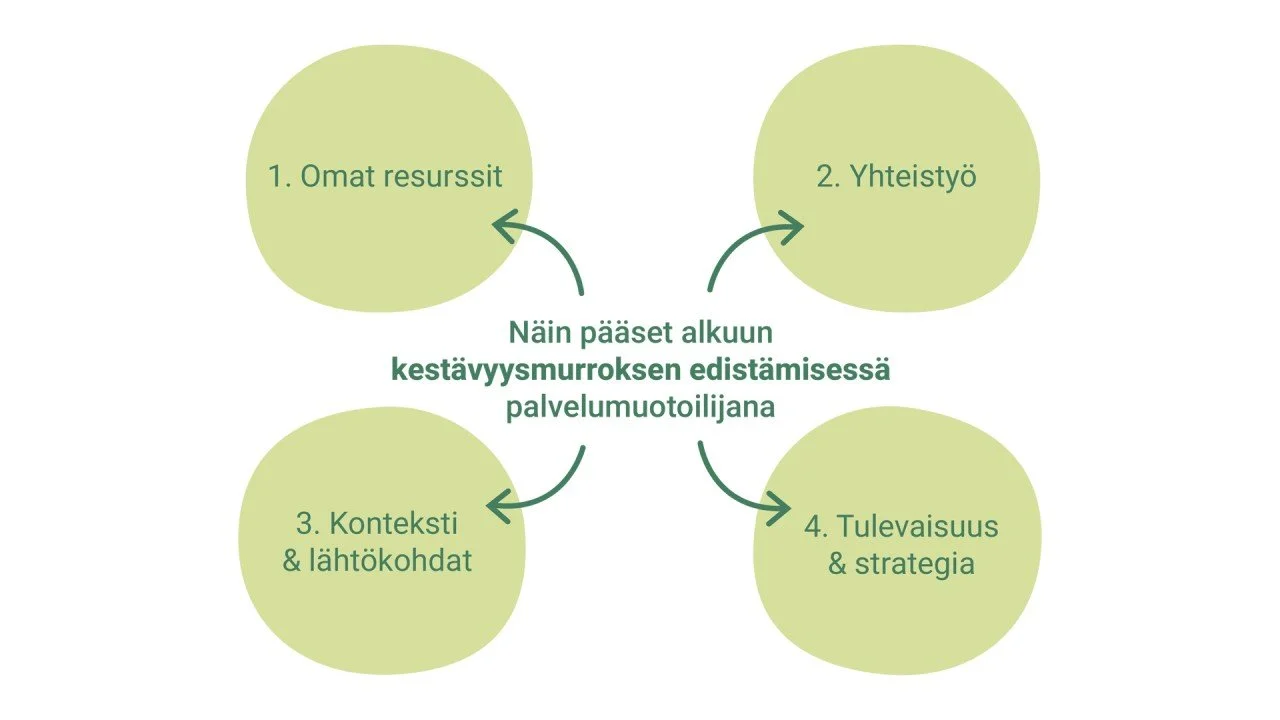
In this article, we offer practical guidance for getting started with sustainability work from four perspectives:
Your own resources
Collaboration
Context and current conditions
Future vision and strategy
Every designer has different opportunities and ways to influence sustainability and contribute to sustainability transitions. We, the Environmental Designers, all work within large public-sector organizations, but the insights shared here can be applied regardless of your role or organizational context.
1. Your Resources: Identify Your Influence, Capabilities, and Strengths
Meaningful change often begins at the individual level. Before launching into a project, it is worth looking inward and reflecting on your motivations and available resources.
Start by considering what matters most to you. What inspires you? What frustrates you? What sustainability issues resonate with your existing knowledge, interests, or personal experiences? These themes may reveal natural opportunities for engagement and influence.
Remember that influencing sustainability issues can happen in all social contexts.
Identify your strengths. Are you a skilled communicator, facilitator, coordinator, network builder, or strategist? Frameworks such as the Inner Development Goals (IDGs) offer useful perspectives on the internal capabilities needed for transformational change.
Map your sphere of influence and consider how you can engage key stakeholders within it.
Reflect honestly on your values and be willing to examine them critically. At the same time, try to identify limiting assumptions that may stem from your cultural background or professional environment. Whenever you find yourself thinking, “This cannot work” or “This is not feasible,” challenge those internal narratives and experiment with alternatives. Give yourself permission to change your mind when new evidence emerges.
Because today's sustainability challenges involve crises that threaten the conditions for life itself, sustainability work can feel slow, demanding, and emotionally taxing. Be compassionate toward yourself. Protect your well-being by setting achievable goals and cultivating a sense of purpose in your work. Doing so helps sustain motivation over the long term.
Commit yourself intentionally to sustainability work. Consider what mindset best supports consistent action within the limits of your resources. If you wish, you can summarize your role, motivations, and goals in an empowering personal mantra, as we did under the guidance of Coral Michelin at the Service Design Global Conference.
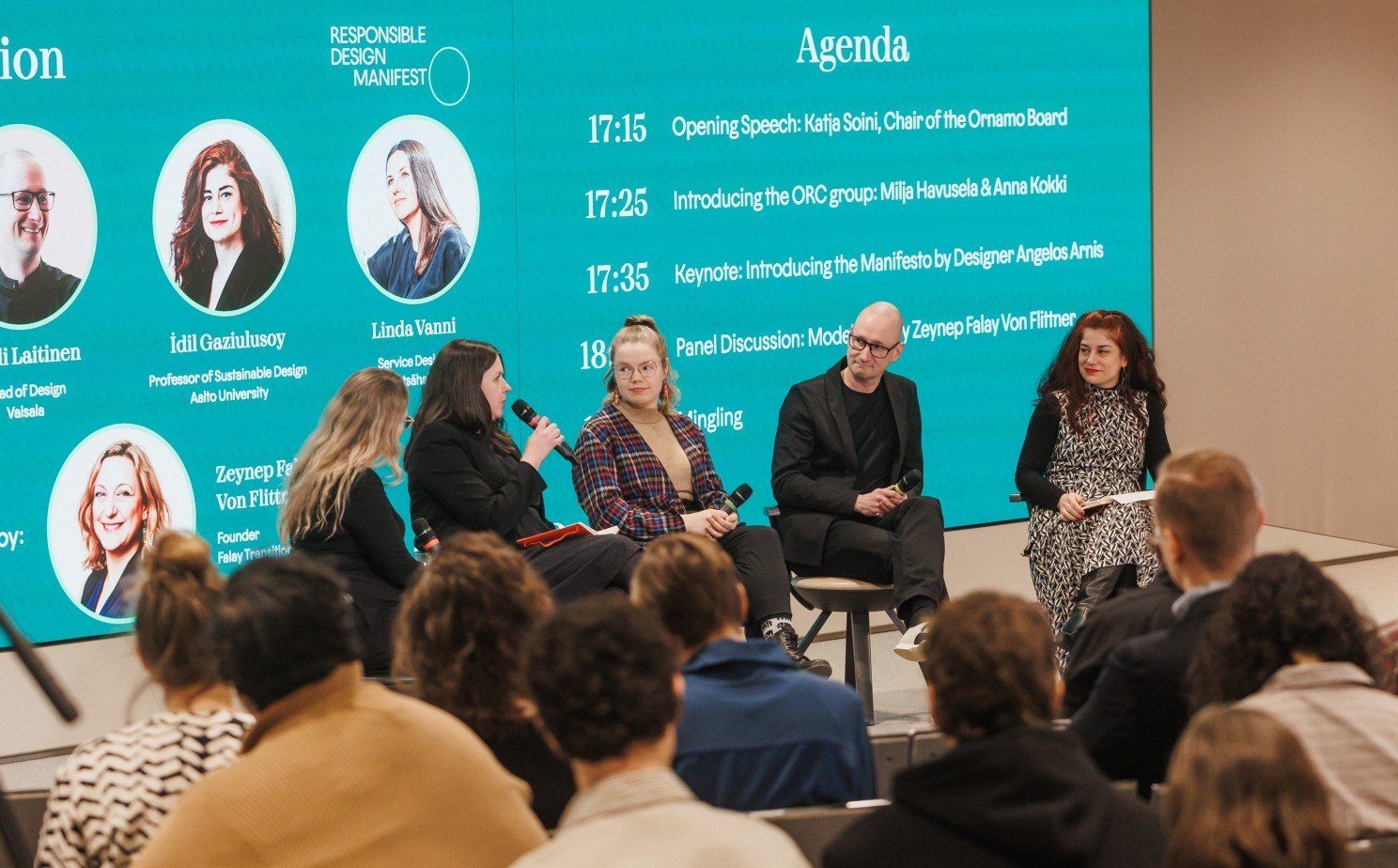
You can also make a public commitment by signing initiatives such as the Responsible Design Manifesto.
2. Collaboration: Organizations, Peer Communities, and Lived Experience
The sustainability transition is one of the most significant transformation processes of our time. Advancing it requires a diverse range of actors, including designers.
No one can solve complex challenges alone, but everyone can contribute. Seek allies, beginning within your own organization.
Accept your limitations—you do not need to know everything or possess every skill. Collaboration and plurality of perspectives are at the heart of all sustainability work. Challenge your own assumptions and seek broader perspectives through networks and communities that offer expertise and lived experiences different from your own.
Look for peer communities that share your values and support both your professional growth and personal resilience. Communities such as Environmental Designers, Ornamo Responsibility Circle, and Sustinaires all contribute to sustainability transitions in different ways.
If you cannot find a community that meets your needs, consider creating one yourself—as we did.
3. Context and Current Conditions: Understand the Present State and the System
Sustainability work often emphasizes the importance of defining a vision and strategy. Before doing so, however, it is essential to understand the current state—the context and starting conditions for change.
This understanding helps identify leverage points and clarify the steps needed to achieve the desired future.
Examine the challenges you have identified as part of a broader context and system. As a service designer, you may unintentionally create new problems if you overlook the fact that all design decisions have systemic consequences.
A useful starting point is ecosystem mapping, which involves identifying the various actors and stakeholders involved. System mapping and visualization can then help reveal relationships, dependencies, and interactions between different parts of the system.
Resources from organizations such as the Systems Innovation Network provide valuable introductions to systems thinking and related methods.
Many tools can support current-state analysis. We have found frameworks such as STEEP and PESTEL particularly useful. By examining political, environmental, social, technological, economic, and value-related trends, it is possible to identify unexpected factors that may influence both short- and long-term outcomes.
It is important to remember that systems are dynamic and complex. While they cannot be fully controlled, it is possible to learn how to work constructively within their complexity.
From a complexity science perspective, the most effective interventions often target systems of which we are already a part. Begin with your own organization or sphere of influence.
As with all design work, defining an appropriate scope is critical. To understand systemic impacts, the scope should be broad enough to extend beyond your organization or sector. At the same time, a scope that is too broad can become unmanageable.
Carefully consider what level of scope is most appropriate for your organization and intended impact.
4. Future Vision and Strategy: What Are We Trying to Achieve and How Do We Get There?
Once the opportunities and constraints of the current state are better understood, attention can shift toward the future.
What kind of future are we trying to create? And how do we move toward it?
If your goal is to influence change within an organization, building shared understanding around the organization’s vision and values is essential. These form the foundation upon which sustainability-related decisions can be justified and prioritized.
Review your organization's strategy, values, and objectives. To what extent do they support a sustainable future? Which values might need strengthening, developing, or adopting to enable long-term sustainability?
Sustainable solutions are easier to advance when sustainability is deeply embedded within an organization's shared vision and strategy.
Whenever strategic discussions arise, look for opportunities to strengthen sustainability ambitions and encourage more ambitious goals.
Have open conversations about organizational values and the practices that bring those values to life. Use visioning exercises as a foundation for value discussions and strategic planning. Without a positive vision of the future, it is difficult to move toward one.
Do not allow current limitations or problems to prevent bold thinking about better systems and alternative futures.
Futures studies offer numerous methods for developing visions and roadmaps. These methods provide a strong foundation for value-based discussions and help shift conversations beyond present-day challenges.
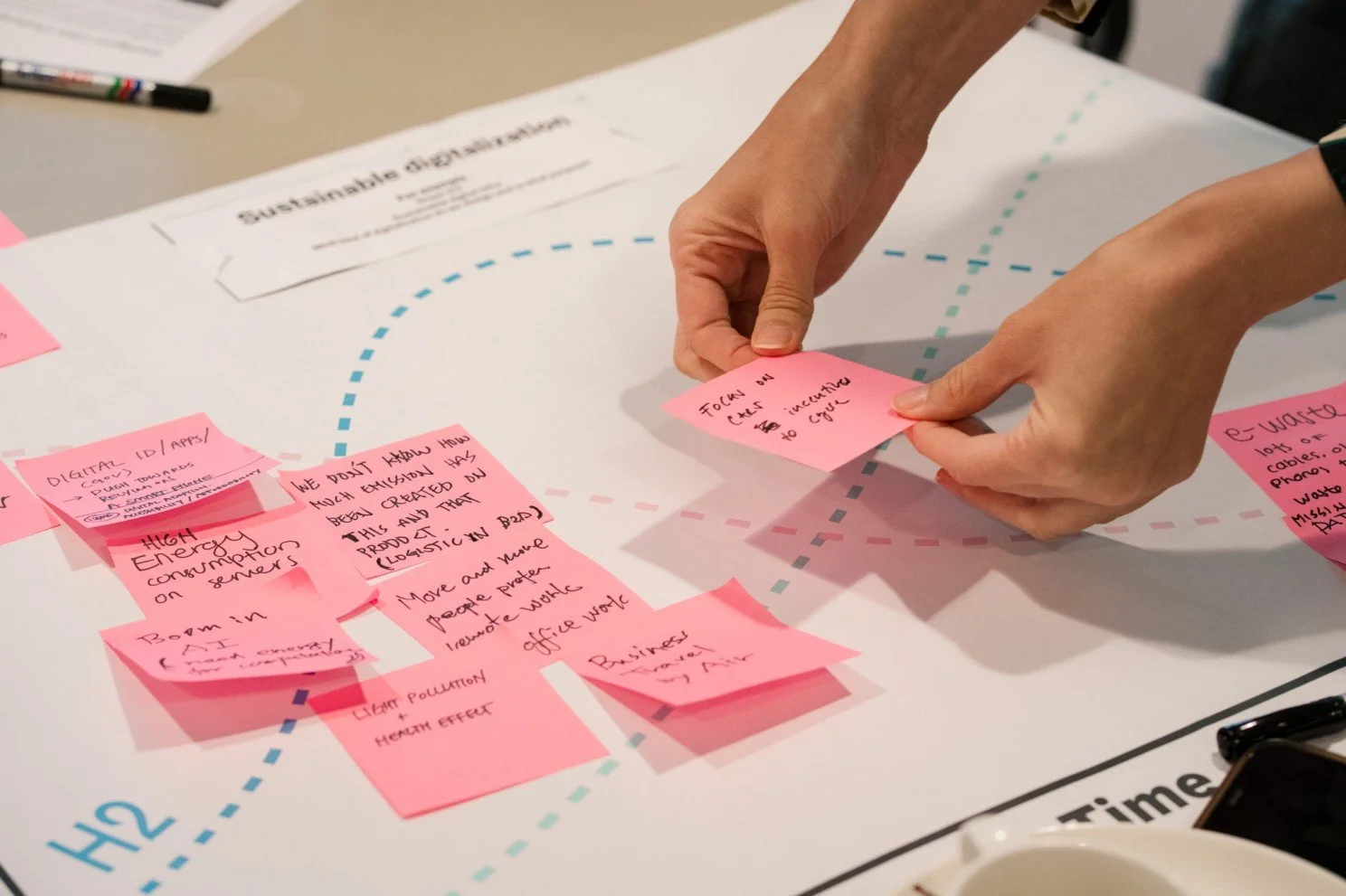
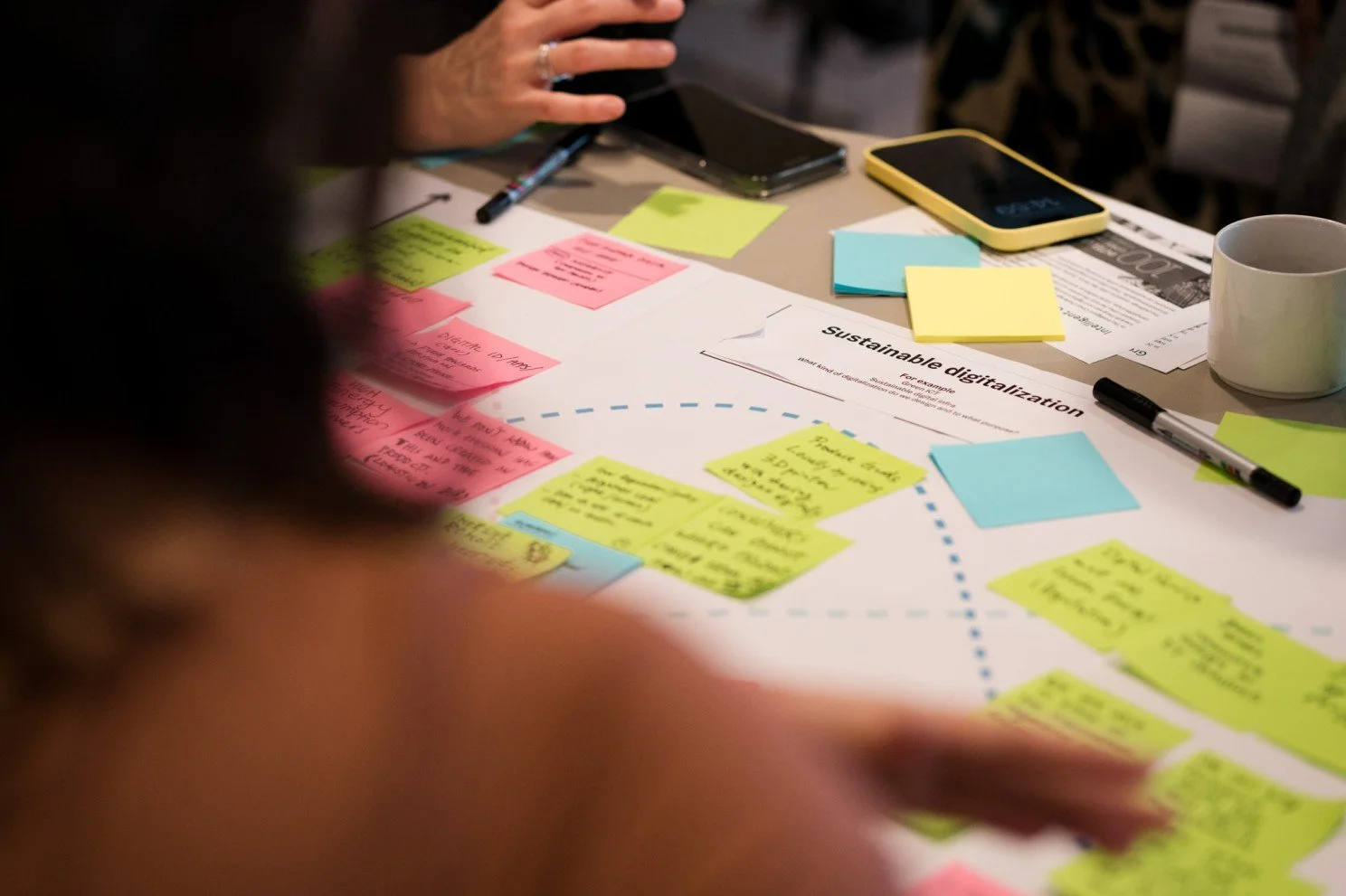
We have personally found great value in Bill Sharpe’s Three Horizons Framework when analyzing sustainability challenges, envisioning transitions, and identifying solutions that can enable systemic change.
The Most Important Thing Is to Get Started
We believe every designer can contribute to sustainability transitions and practice responsible design, regardless of role or organizational context.
The most important step is simply to begin.
Take these perspectives into your toolkit as you prepare for your next project:
Reflect on your own resources and opportunities.
Build partnerships and seek support from peer communities.
Understand the systemic context and current conditions.
Contribute to shaping your organization’s vision and strategy.
With these foundations in place, you can move toward concrete actions and meaningful goals.
Remember that sustainability transitions are not a sprint. They are more like an ultra-marathon run as a relay race. The more people who join the team, the lighter the journey becomes. Join us on the journey!
Authors
Emma Berg works as a specialist in the City of Helsinki’s Building Control Services, focusing on advisory services for housing associations. She has facilitated Environmental Designers gatherings since 2021.
Tessa Dean coordinates and develops adaptation advisory services and experimentation projects for housing associations within the City of Helsinki. She also serves on the board of Helsinki’s Service Design Network.
Linda Vanni works as a Service Designer at Metsähallitus Parks & Wildlife Finland, focusing on digital services and customer experience development. She is also a board member of Ornamo and actively contributes to networks such as the Ornamo Responsibility Circle.
Presentations Referenced in the Article
Designing for Impact: Reflections on Designer’s Agency – Sonja Nielsen, Service Design Global Conference
If You Can’t Tame It, Embrace It: Complexity Science for Service Designers – Jennifer Briselli, Service Design Global Conference
Agents of Systemic Change – Alessandra Molderings-Enriconi, Service Design Global Conference
The Long Slog of Governmental Design – Kara Kane and Martin Jordan, International Design in Government Conference